
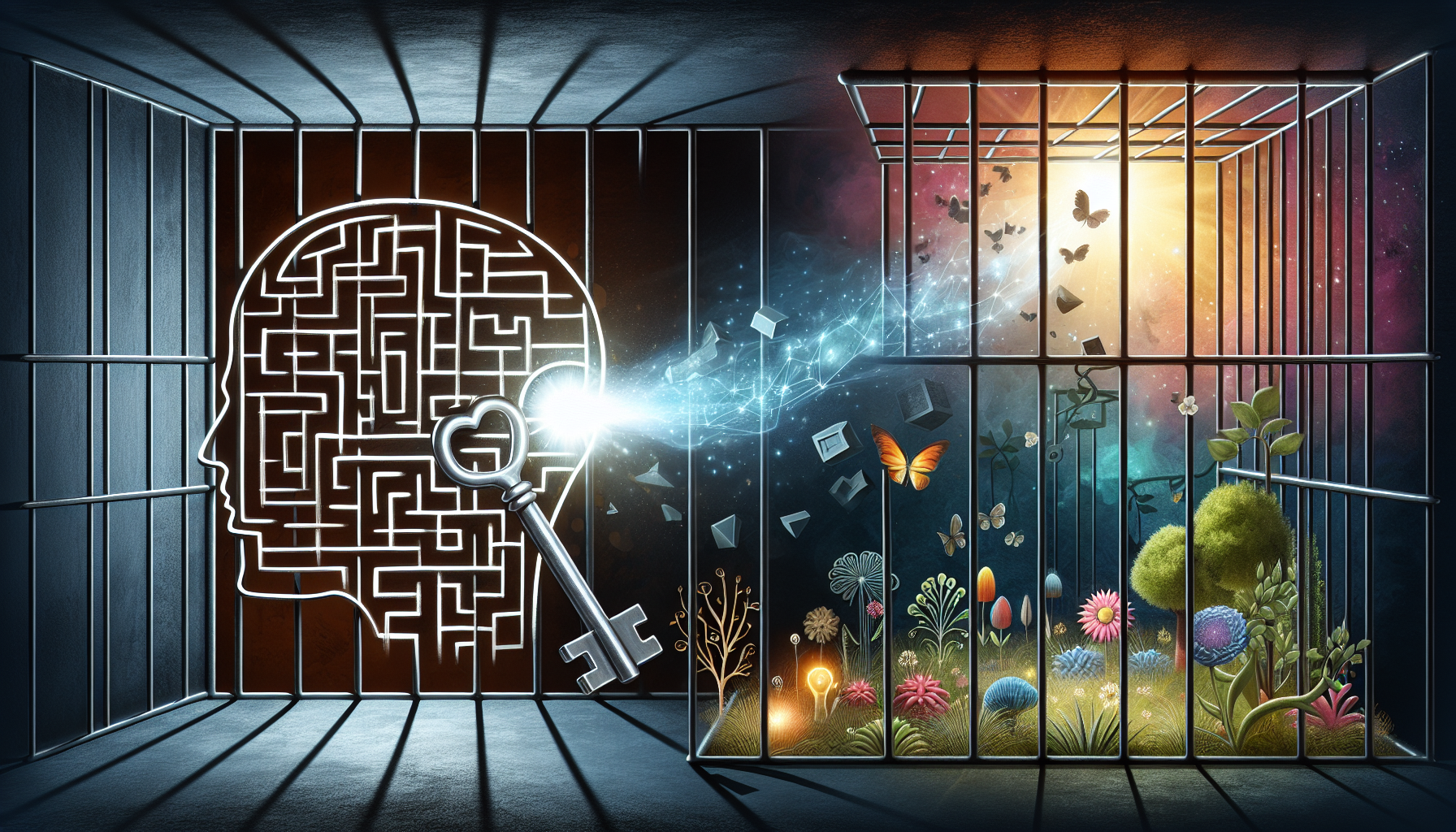

Feeling trapped in your own mind can be a suffocating experience, but there is hope. Escaping your mental cage involves breaking free from the limitations and barriers that your mind sets, often subconsciously. This can involve challenging your own beliefs, confronting fears, and expanding your comfort zone. Here are some strategies I personally followed that helped me escape the mental cage:
Table of Contents
- Self-Awareness
- Mindfulness Practices
- Challenge Negative Thoughts
- Set Realistic Goals
- Seek Support from Loved Ones
- Identify the Root Causes
- Develop a Healthy Coping Mechanism
- Reframe Limiting Beliefs
- Celebrate Small Victories
- FAQ
Self-Awareness
Understanding the mind starts with self-awareness. I must identify and acknowledge the thoughts and emotions that make me feel trapped. This awareness is the key to unlocking my mental freedom and reclaiming my inner peace.
Imagine yourself as a gardener, but instead of nurturing plants, you’re cultivating self-awareness in the fertile soil of your mind. This garden is unique; it requires introspection, reflection, and a bit of soul-searching to thrive.
1. Start with the Seeds of Curiosity: Just as a gardener begins with seeds, your journey to self-awareness starts with curiosity about yourself.
Ask yourself questions like,
“What truly motivates me?”
“What are my fears?” and
“What makes me happy?”
These questions are the seeds that sprout self-knowledge.
2. Water with Reflection: Dedicate time each day to reflect on your thoughts, feelings, and behaviors. Journaling can be a great tool here, acting like a watering can that reaches deep into the roots of your psyche.
3. Fertilize with Feedback: Feedback from others can act like fertilizer for growth. It can be uncomfortable to hear how others view us, but just like fertilizer, it can lead to richer growth.
Be open to constructive criticism and ask trusted friends about how they perceive you and your actions.
4. Prune the Weeds of Negative Thoughts: In any garden, weeds will sprout, and in the garden of self-awareness, these weeds are your unhelpful and negative thoughts that can cloud your self-perception.
Try being mindful to recognize these invasive thoughts and gently remove them, making space for more productive and positive thinking.

5. Harvest the Wisdom: As you tend to your garden, you’ll start to reap the benefits of increased self-awareness.
This newly found wisdom allows you to make more informed decisions, improve your relationships, and lead a more fulfilling life.
6. Enjoy the Beauty of Being Present: Just as a gardener takes time to enjoy their garden, take time to live in the present. Appreciating the moment can grow your self-awareness.
Gaining self-awareness is a lifelong process, similar to tending a garden. It requires patience, dedication, and care, but the rewards of harmony and insight are well worth the effort.
Identify The Root Cause
Understanding the root causes of feeling trapped in your own mind is important to break free from mental confinement.
Identifying patterns in your behavior or thinking, especially those that may be limiting is necessary. Here’s how you can do that:
1. Keep a Journal
Journaling is one of the most effective ways that helped me to track my thoughts and behaviors.
Regularly write down your feelings, thoughts, and the outcomes of your day. Over time, you might begin to notice patterns or triggers that lead to certain behaviors or emotional states.
2. Reflect on Reactions and Behaviors
Pay attention to how you react to various situations. Are there specific triggers that consistently provoke a certain response from you?
For example, you might notice that you respond with anger to situations where you feel out of control, indicating a pattern of reaction to perceived helplessness.
3. Look for Repetitive Thoughts
Our thoughts can tell us a lot about our underlying patterns. Notice if there are recurring themes in your worries or daydreams.
For example, if you often worry about being judged, this pattern may indicate an underlying fear of rejection.
4.Analyze Outcomes
Look at the outcomes of your behaviors and consider whether there’s a common thread. Do similar actions always lead to similar results?
For instance, if avoiding confrontations tends to leave you feeling resentful, this pattern might suggest a need to develop more assertive communication skills.
Understanding these patterns makes you understand the root cause which helps you in changing them and developing healthier ways of thinking and behaving.
Mindfulness Practices
This is really important. Mindfulness techniques are essential to break free from mental confinement.
When I started practicing mindfulness, I realised that with time, I developed a present-focused awareness that allowed me to detach from negative thought patterns and gain a sense of calm and clarity.
Challenge Your Negative Thoughts
It’s necessary to question and reframe negative beliefs that contribute to feeling trapped. Consciously replace them with positive and realistic perspectives.
Include Your Loved Ones
Empowerment comes from seeking support. Talking to friends, family, or a mental health professional can provide the outlet needed to share your feelings and thoughts. By reaching out, you can gain valuable perspectives and emotional support that can help in breaking free from mental confinement.
Healthy Coping Mechanism
Whether it’s through creative outlets, physical activities, or relaxation techniques, finding constructive ways to cope with negative thoughts and emotions is the key here.
When I established healthy coping strategies, I realised I got better in managing stress and started to grow a resilient mindset that helped me to reclaim my mental freedom.
Reframe Limiting Beliefs
This one is unavoidable, you need to question and reframe your negative beliefs because they contribute to you feeling trapped.
Replace them with positive perspectives. This is help you to shift your mindset towards one that leads to mental freedom.
Small Victories Are Equally Important

Not just big achievements, but celebrating small victories is necessary. Acknowledge and celebrate the progress you make, no matter how small.
Each step forward, no matter how incremental, is a testament to your strength and resilience. By celebrating these victories, you reinforce positive momentum and cultivate a sense of achievement and empowerment.
FAQ
Below are some common questions about breaking free from mental confinement and regaining mental freedom.
What can I do when I feel trapped in my mind?
When feeling trapped in your mind, it’s important to start with self-awareness. Identify and acknowledge the thoughts and emotions that contribute to this feeling of entrapment. Engaging in mindfulness practices and seeking support from loved ones can also be beneficial in breaking free from mental confinement.
How can mindfulness practices help in breaking free from mental confinement?
Mindfulness practices, such as meditation or deep breathing, can help you stay present and reduce mental clutter. By engaging in these techniques, you can cultivate a present-focused awareness that allows you to detach from negative thought patterns and embrace a sense of calm and clarity.
Why is it important to challenge negative thoughts?
Challenging negative thoughts is essential for breaking free from mental confinement. By questioning and reframing negative beliefs, you can replace them with more positive and realistic perspectives, thereby shifting your mindset towards one that empowers you and fosters mental freedom.
How can setting realistic goals contribute to reclaiming mental freedom?
Setting realistic goals is crucial as it allows you to break down larger issues into smaller tasks. Achieving these smaller goals can create a sense of accomplishment and empowerment, contributing to your journey towards mental freedom.
Why is seeking support important in breaking free from mental confinement?
Seeking support from friends, family, or mental health professionals provides an outlet to share your feelings and thoughts. The valuable perspectives and emotional support gained from seeking support can aid in breaking free from mental confinement.

By Ajita Sharma


Leave a Reply